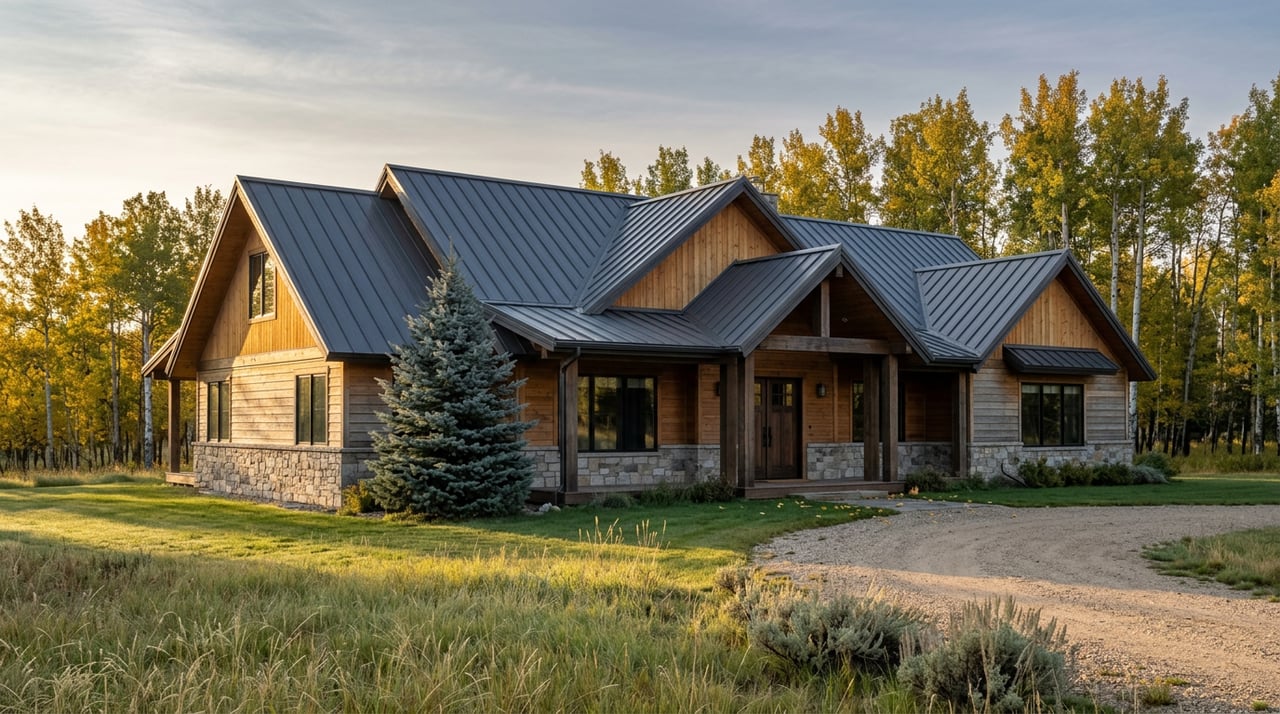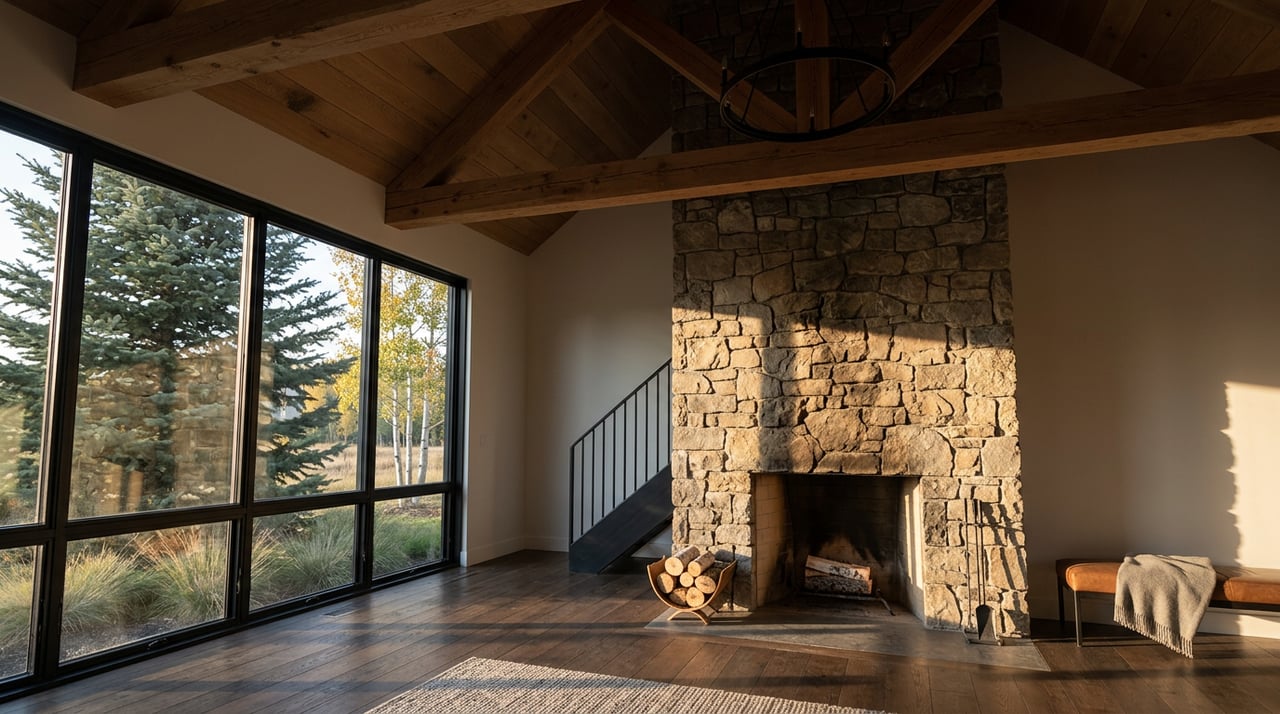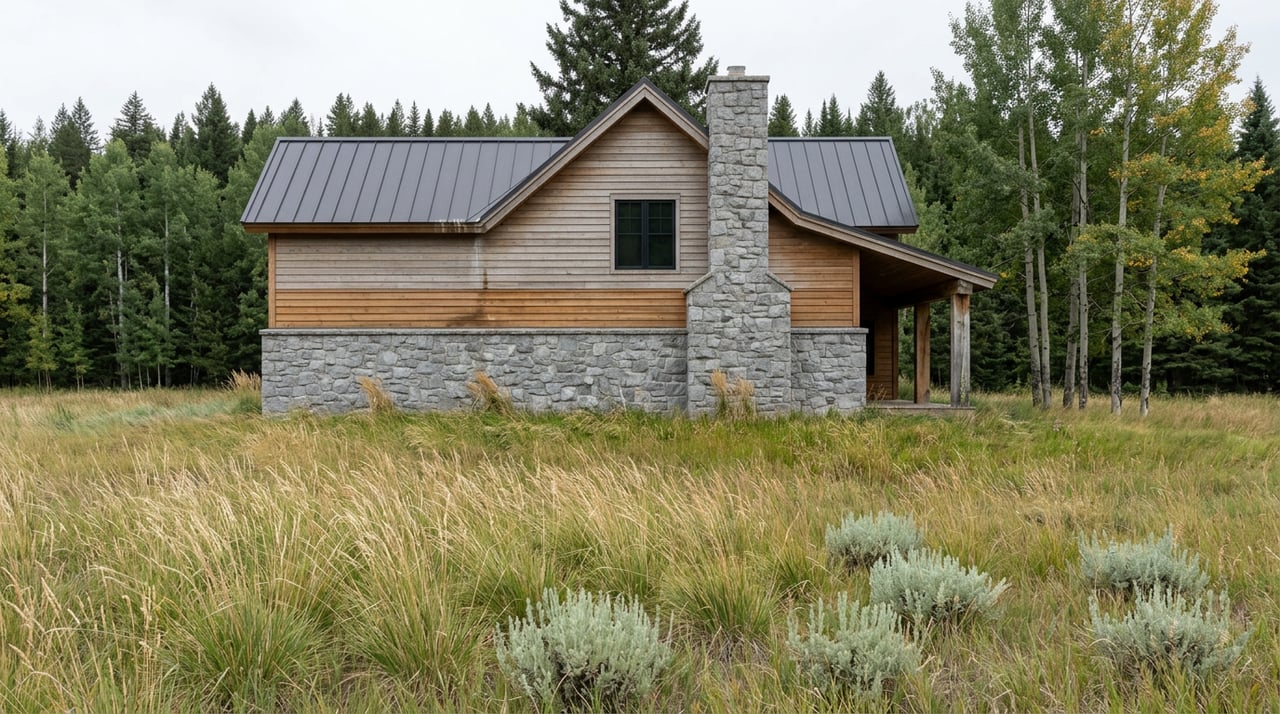
Two properties are currently for sale in Cora, Wyoming. One is a 5.06-acre parcel in the Calico Trails subdivision, raw ground with no structure, priced at $163,000. The other sits on White Point Road: ten acres with an eight-bedroom, five-bath log home running 8,808 square feet, listed at $3.35 million.
Both are "homes for sale in Cora." Average them together, or average either one against the dozens of other listings that rotate through this tiny market, and you get a number that describes neither property. That's the problem with reading Cora's market through a single average price. The number isn't wrong. It's just measuring something closer to a coin flip than a trend.
Why One Listing Can Move the Whole Market
Cora doesn't have a housing market in the way Pinedale or Jackson does. It has a handful of listings at any given moment, and which handful happens to be active determines what the "average" says. Search portals themselves can't even agree on how many listings exist. One shows around 30 active listings when you widen the search to include land. Another shows four homes. A land-specific site puts active house listings at six.
That spread isn't a data error. It reflects different radius settings, different definitions of "for sale," and a market so thin that a single new listing changes the sample size by double digits. When Realtor A's website counts four homes and Realtor B's counts thirty, you're not looking at two takes on the same market. You're looking at two different samples pulled from a pool too small to average meaningfully in the first place.
This matters if you're comparing Cora's number to a bigger town's number and treating them as apples to apples. A median built from thirty transactions in Pinedale absorbs the outliers. A median built from four or six listings in Cora doesn't. One riverfront log home skews the whole picture for months.
The County Number Has the Same Problem, Just Bigger
Zoom out to Sublette County as a whole and the volatility doesn't disappear, it just gets a bigger dollar sign attached. County-wide home price data from April 2026 showed a year-over-year jump of nearly 35 percent, landing at just over $673,000. That is not a market appreciating 35 percent in twelve months. Sublette County simply doesn't close enough transactions in a given month for that kind of swing to reflect broad price movement. It reflects a change in which properties happened to sell. A county with a handful of ranch and luxury closings in one window and a handful of modest, in-town transactions in the next window will show whipsaw numbers that have nothing to do with what any individual home is actually worth.
The same instability shows up in the land data. Price-per-acre figures for Sublette County pulled from different snapshots of the same listing aggregator have ranged from roughly $16,000 to over $30,000 an acre. That's not a typo or a bad scrape. It's what happens when a 40,000-acre working ranch and a 10-acre subdivision lot both get folded into the same "price per acre" calculation. The math is correct. The number just isn't describing one market.
What a Straight Comparison Actually Looks Like
Here's how average home values compare across a few nearby markets, pulled from the same source at the same time, to make the point concrete:
| Town | Average Home Value |
|---|---|
| Pinedale | $376,352 |
| Boulder | $418,789 |
| Cora | $512,309 |
| Jackson | $1,532,536 |
Read left to right and it looks like a clean ladder from affordable to expensive. It isn't. Pinedale's number is built from the county's most active residential market, the one place with enough volume for an average to mean something close to what people expect an average to mean. Cora's number, sitting in the middle, is built from a sample so small that one luxury log home or one bare acreage lot can swing it by six figures in either direction. Jackson's number reflects a market with its own dynamics entirely, driven by land scarcity and national buyer demand that doesn't touch Sublette County's math at all.
So the honest takeaway isn't "Cora costs more than Boulder." It's that Cora's number is unstable in a way Pinedale's isn't, and a buyer who takes it at face value is trusting a coin flip.
What Actually Explains the Spread
If the average doesn't tell you much, the listing itself does. Look at what's actually driving Cora's price range and a clearer picture shows up.
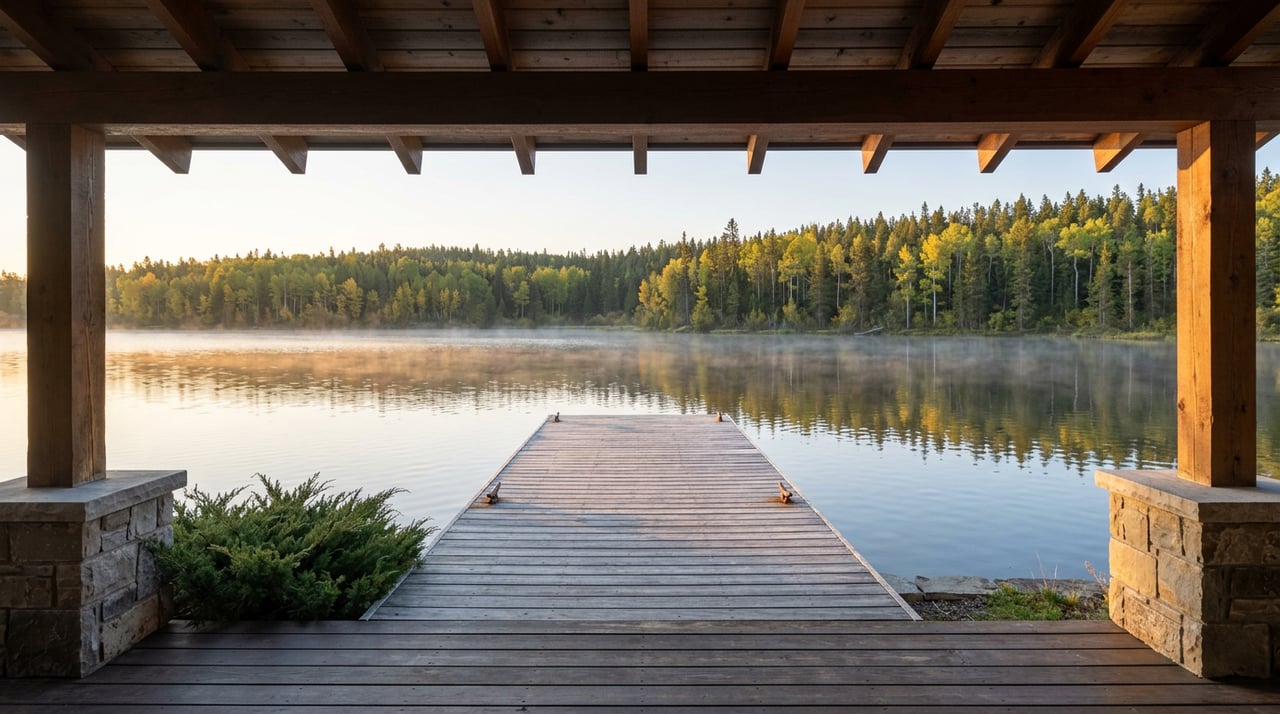
A ten-acre parcel in Kendall Valley, near the Bridger-Teton National Forest boundary, carries a subdivision fishing easement onto nearly a mile and a half of private water on the Green River. That easement is doing real work in the price. A similarly sized, similarly located parcel without water access, like the 10.3 acres listed on Forty Rod Road for $225,000, sits in a different price tier entirely, not because the ground itself is worth less, but because it doesn't come with river frontage rights.
Then there's the structure question. Calico Trails Lot 10, at 5.06 acres and $163,000, is unimproved. The White Point Road property, at ten acres and $3.35 million, includes an 8,808-square-foot log home. Compare those two on a per-acre basis and the math looks absurd, because you'd be comparing bare dirt to a finished luxury residence as if the land were the only variable.
A price per acre only means something once you know what's actually on the acre, and whether that acre touches water.
That's the real lesson in Cora's numbers. The spread isn't noise. It's structure, water access, and subdivision terms doing exactly what they're supposed to do. The average just can't see any of that.
How to Actually Read a Listing Here
A few things worth checking before you compare any two Cora properties on price alone:
- Is the price for land, a structure, or both? A raw acreage listing and an improved home listing shouldn't be evaluated on the same per-acre basis.
- Does the parcel include water rights or a fishing easement? Access to the Green River or another live water source changes the value equation more than acreage does.
- What subdivision is it in, and what does that subdivision guarantee? Kendall Valley and Calico Trails carry different access, easement, and infrastructure terms even though both sit near Cora.
- How many comparable listings actually exist right now? With single-digit inventory, "comparable" sales from six months ago may already be stale.
What This Means If You're Weighing Cora Against Its Neighbors
Sublette County's residential market, broadly, moves faster in the $300,000 to $600,000 range, where correctly priced homes tend to find buyers within about ninety days. Land and ranch ground turns over much more slowly, often waiting for the one buyer who wants exactly that acreage, that water access, that proximity to the forest boundary.
Cora, along with Boulder, Daniel, and Bondurant, leans toward the land and ranch side of that equation. Big Piney and Marbleton tend to offer the more affordable, faster-moving entry points in the county. If your budget sits in that $300,000 to $600,000 improved-home range, you're operating in the more liquid part of the market no matter which of these small towns you're looking at. If you're chasing acreage with water rights specifically in Cora, patience is part of the deal, and so is looking past the average to the actual parcel in front of you.
A Few Questions Buyers Ask
Why do different real estate sites show such different numbers for Cora? Because they're pulling from different radius settings and different definitions of active inventory in a market with only a handful of listings at any time. A small sample size means small changes in methodology produce large swings in the reported number.
Is Cora actually more expensive than Boulder or Pinedale? Not necessarily. The averages suggest a ladder, but Cora's number is built from far fewer transactions, so it's more easily distorted by one high-end or one bare-land listing. Treat any single comparison between these towns as a starting point, not a verdict.
Should I wait for Cora's average price to come down before buying? Given how few transactions set that number, waiting for the average to move is waiting for a coincidence. A better approach is looking at the specific parcel, its water access, its subdivision terms, and what similar structures have actually sold for, rather than watching a county-wide figure that can jump 35 percent in a year without any underlying shift in value.
If you're looking at land or a home in Cora and want someone who can walk the actual parcel questions with you, not just hand you a portal average, Janelle Villalba knows this part of Sublette County the way it needs to be known: acre by acre, easement by easement. Start Building Your Legacy. Get a free home valuation and a read on what your specific property, or the one you're eyeing, is actually worth.