If you are dreaming about a horse property in Bondurant, you are probably picturing more than a house with a few acres. You are thinking about room to ride, space for barns and paddocks, reliable access in every season, and a property that actually works for the way you want to live. In Bondurant, those details matter just as much as the view, and this guide will help you know what to look for before you buy. Let’s dive in.
Why Bondurant Appeals to Horse Buyers
Bondurant offers a rural setting that fits buyers looking for land, privacy, and access to the outdoors. It is not a typical subdivision market, and that is exactly why many horse-property buyers are drawn to it. You may find everything from smaller lifestyle parcels to much larger legacy holdings.
Current public listings show just how varied the market can be. Public search results near Bondurant include horse properties averaging about 22.3 acres, with examples ranging from around 6.7 acres and 9.59 acres up to 19.65, 35, 40, and 49.73 acres, plus much larger tracts in the area. That means your search should focus less on a “standard” lot size and more on how the land actually supports your goals.
Some listings also highlight features like fencing, paddocks, horse setups, forest access, and year-round access. Those details are often more useful than acreage alone. A 10-acre parcel with practical horse improvements and dependable access may fit your needs better than a larger property that creates extra hurdles.
Start With Land Use and Zoning
One of the biggest mistakes you can make in a rural market is assuming that if land looks right for horses, it is automatically ready for your intended use. In Sublette County, private lands are assigned zoning districts, and land use questions should be verified early. That is especially important if you want more than personal horse use.
Sublette County’s zoning code defines one horse or foal as one animal unit and says livestock may only be maintained on sites larger than one acre. The county also lists a stable as a permitted use in the Rural Mixed district. Even so, you should confirm the parcel’s actual zoning district before assuming horse use, stable use, or any future boarding plan is allowed.
This matters because Bondurant is a permit-driven market. The county requires separate review or approvals for many common property actions, so your due diligence needs to go beyond the listing description. If you are buying with a specific vision in mind, zoning should be one of the first things you verify.
Questions to Ask About Horse Use
Before you move forward on a property, ask:
- What zoning district applies to the parcel?
- Does that zoning allow your planned horse use?
- If you want a stable setup, is that use permitted?
- If the property is in an HOA, is written approval required before permit work begins?
Look Beyond Acreage
It is easy to focus on the number of acres, but usable horse property is about function. You want to know how the land lays out, how much of it is practical for turnout or riding, and whether the improvements support your day-to-day routine. A beautiful parcel can still fall short if the layout does not work.
In Bondurant, buyers often place a premium on horse-ready features like fencing, paddocks, loafing areas, tack space, hay storage, and access for trailers. These improvements can save you time and money after closing. They can also make a property more comfortable to use right away.
You should also think about how the property handles weather and seasons. Year-round access, snow conditions, and the ability to move horses, hay, and equipment safely can have a major impact on ownership. Practical use often matters more than postcard appeal.
Barns, Sheds, and Other Improvements
Sublette County does not operate like a typical suburban area with a standard residential building department. The county states that it has not adopted a residential building code and does not have a building department. It also does not regulate snow loads or structural IBC codes, although it encourages snow-load-aware design, and state electrical codes still apply.
That does not mean you can ignore permits. The county still requires building permits for many residential and accessory structures. Detached accessory buildings and structures not intended for human occupancy that are 400 square feet or less are exempt, but larger barns, storage areas, and related structures may involve permit review.
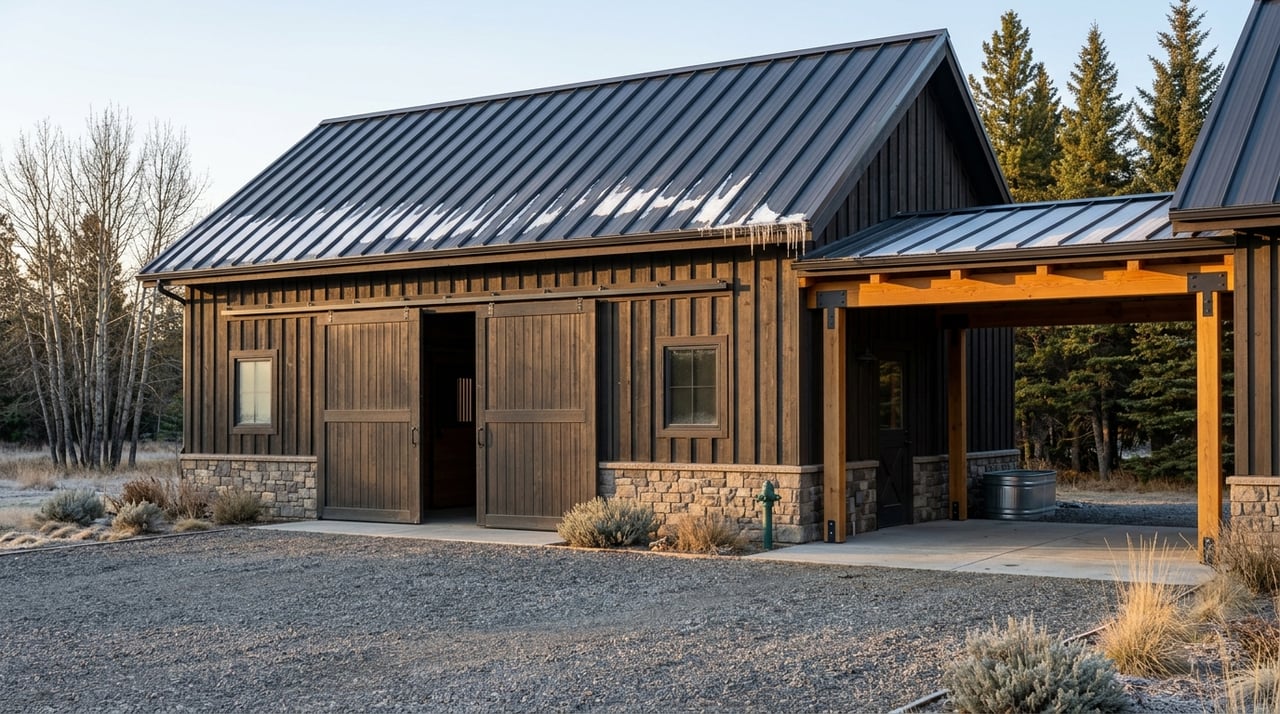
For horse buyers, this is an important detail. Barns, loafing sheds, tack rooms, hay storage, fencing, and paddock areas should be reviewed not only for function, but also for setbacks, site placement, utility needs, and permit history where applicable.
Site Plan Details Matter
When permit review is required, the county asks for site plans showing:
- Property boundaries
- Building locations
- Well location
- Septic location
- Driveway access
If you plan to add horse improvements later, it helps to know early whether the parcel layout supports those plans.
Access Can Make or Break a Horse Property
In a market like Bondurant, access is not a minor detail. It is one of the first things you should confirm. You need to know how you legally reach the property, what kind of road serves it, and whether you can comfortably use that access year-round with trucks, trailers, and service vehicles.
Sublette County requires an access permit when a driveway connects to a county road. If access comes from a state highway, the process goes through WYDOT. The county also notes that property owners are responsible for ensuring access and utility easements are established.
This is where rural due diligence becomes very real. A listing may mention access, but you still want to verify recorded easements, driveway permits, and whether your expected use matches the physical road conditions.
Check Road Maintenance and Snow Removal
Road maintenance is especially important in Bondurant. The county’s Road & Bridge Department maintains county roads and provides snow-plowing resources only for county-maintained roads. In subdivision review, the county requires disclosure when there will be NO PUBLIC MAINTENANCE OF STREETS OR ROADS.
That means you should ask whether the road is county-maintained or privately maintained. If it is private, find out who handles plowing, grading, and ongoing costs. For horse owners, reliable winter access can affect everything from feed delivery to veterinary visits.
Water, Septic, and Utility Basics
Utilities in rural Wyoming deserve early attention. On a horse property, water and wastewater are not just house questions. They can affect livestock use, future improvements, and your daily operations.
Sublette County requires septic permits for new systems, replacements, and expansions. The county also notes that some systems may require engineered design. If the existing system is older or if you plan to expand structures or use, you will want to confirm whether the system is properly permitted and sized for your intended use.
For water, well permits are issued through the State of Wyoming, and a permit is required before drilling a domestic or stock well. If a property already has a well, ask about its permit status and practical capacity for the use you have in mind.
Do Not Forget the Small Rural Details
Some practical items can surprise out-of-area buyers. Sublette County notes that the USPS does not provide home mail delivery to all properties, so some owners may need a P.O. box. It is a small detail, but it reflects the broader reality that rural ownership comes with different logistics than in-town living.
If the property includes irrigated pasture or mentions water rights, verify whether those rights are included and how they transfer. The county treats water-right status as a material issue in development review, so this is not something to leave vague.
Riding Access Is Part of the Lifestyle
For many buyers, Bondurant is not just about keeping horses at home. It is about where those horses can take you. Nearby public-land access is a major part of the area’s appeal.
The Bridger-Teton National Forest offers horseback riding and horse camping opportunities, including trails through forests, across rivers, and up mountain slopes. The Forest Service currently lists 170 horseback-riding opportunities and 57 horse-camping opportunities, and wilderness areas such as the Gros Ventre and Bridger are open to horseback travel.
That setting shapes how many buyers define value in Bondurant. A property near forest access or with practical trailering convenience may offer a better fit than one with more acreage but less usable connection to the surrounding landscape.
Ask the Right Riding Questions
If trail riding is a big part of your plan, consider:
- How do you access nearby public land?
- Are there practical trailer routes in and out?
- Is access workable year-round?
- What are the local horse-camping or trail-use rules?
- Will you need certified weed-free hay for public-land riding trips?
These questions can help you match the property to the lifestyle you actually want.
Your Bondurant Horse-Property Checklist
When you are comparing properties, keep your evaluation grounded in the details that affect ownership most.
Focus on these core checkpoints:
- Verify the zoning district and intended horse use
- Confirm livestock and stable compatibility for the parcel
- Review barns, sheds, fencing, paddocks, and hay storage
- Check permit history or future permit needs for improvements
- Confirm recorded access easements and driveway approvals
- Ask whether the road is county-maintained or private
- Review winter access and snow-removal expectations
- Verify well permit status and practical water use
- Confirm septic permitting and system capacity
- Ask whether water rights convey if pasture is irrigated
- Check HOA approval requirements if applicable
A good horse property is not just scenic. It is usable, supportable, and aligned with your long-term plans.
Why Local Guidance Matters
In Bondurant, buying a horse property is often less about finding a listing and more about verifying what the land can truly do. This is a market where zoning, permits, access, utilities, and riding fit all play a major role in whether a property works for you.
That is why a process-first approach matters. When you have someone helping coordinate the right questions early, you can avoid getting attached to a lifestyle vision that the property may not support. Clear local guidance can help you buy with confidence and protect your time, money, and future plans.
If you are exploring horse properties in Bondurant or anywhere in Sublette County, Janelle Villalba can help you navigate the rural details, compare options, and move forward with a clear plan.
FAQs
What makes Bondurant, Wyoming horse properties different from suburban horse properties?
- Bondurant horse properties are part of a rural, permit-driven market where zoning, access, well and septic questions, and road maintenance often matter as much as the home and acreage.
How much acreage do you usually see with horse properties in Bondurant?
- Current public listings near Bondurant show a wide range, from smaller parcels around 6.7 to 9.59 acres up to 19.65, 35, 40, and 49.73 acres, with much larger tracts also appearing in the market.
Can you keep horses on any rural property in Bondurant?
- No. Buyers should verify the parcel’s zoning district because horse use should not be assumed automatically, and Sublette County says livestock may only be maintained on sites larger than one acre.
What should you verify about barns and outbuildings on a Bondurant horse property?
- You should review how existing barns, sheds, tack rooms, hay storage, and other structures function for horse use, while also confirming whether permits, setbacks, utilities, or site-layout issues affect those improvements.
Why is road access so important for a horse property in Bondurant?
- Access affects daily use, trailer movement, feed delivery, emergency service access, and winter reliability, and buyers should confirm easements, driveway permits, and whether the road is publicly or privately maintained.
What utility questions matter most when buying a horse property in Bondurant?
- The key questions are whether the well and septic are properly permitted, whether they are sized for your intended use, and whether any irrigated pasture includes water rights that transfer with the property.
Is nearby trail riding part of the appeal of horse properties in Bondurant?
- Yes. Bondurant buyers are often drawn to nearby access to Bridger-Teton National Forest, where horseback riding and horse camping opportunities are a major part of the area’s outdoor lifestyle.