Dreaming about a few acres outside town? In Boulder, Wyoming, that dream often comes with more freedom, but it also comes with more responsibility. If you are considering 5 to 20 acres here, it helps to understand how water, road access, snow removal, and county rules can shape daily life before you buy. Let’s dive in.
What small-acreage living means in Boulder
Boulder sits in Sublette County, where private-land ownership exists within a county that is about 3.2 million acres and roughly 80% public land. That setting gives many buyers the space and privacy they want, but it also means private infrastructure and owner responsibility are part of the lifestyle.
For many rural-residential properties, zoning falls into districts like R-R 5, R-R 10, and R-R 20. Those districts have minimum site-area standards of 5, 10, and 20 acres, which is one reason parcel size matters so much when you start thinking about building, access, setbacks, and utilities.
On paper, 5 to 20 acres can sound simple. In practice, how usable that land feels often depends on the basics: where the driveway goes, how water will be supplied, where septic can be placed, and whether any private-road or HOA obligations apply.
Water planning comes first
When you look at a small-acreage property in Boulder, water should be one of the first topics you explore. In Sublette County, well questions are directed to the Wyoming State Engineer’s Office, and wastewater questions are handled through the Wyoming Department of Environmental Quality along with county septic requirements.
If you plan to drill a groundwater well, you need a permit from the Wyoming State Engineer before drilling begins. The well must be drilled by a Wyoming licensed water-well drilling contractor, and pumps must be installed by a licensed pump contractor. According to the State Engineer’s Office information referenced by the county, domestic and stock use permits typically take about 1 to 2 weeks.
Not every parcel will rely on the same water setup. Some properties may be served by a well, while others may involve a cistern. The county defines a cistern as a buried water-storage tank with year-round functionality, and cisterns may also show up in subdivision fire-water planning.
If a property is part of a subdivision-style development, the county requires a certified domestic water-supply plan. If no domestic water source is proposed, that fact must be disclosed in the plat and related sales materials. That makes water planning more than a convenience issue. It is a core part of how the property is represented and used.
Water rights can affect land use
In Boulder and greater Sublette County, water is not only a household issue. It can also be tied to agricultural use and long-term land function.
During subdivision review, the county looks at whether a proposed development could interfere with existing agricultural water rights. County policy also says that if adjudicated water rights are involved, subdivision plans must address delivery impacts and any effects on ditches or canals.
For you as a buyer, that means the conversation may go beyond, “Does it have a well?” You may also need to understand whether irrigation features, ditches, or established water-right patterns affect how the land operates.
Septic rules matter more than many buyers expect
Wastewater planning is another major piece of small-acreage living. In Sublette County, a county septic permit is required before construction, replacement, or modification of a septic system, and the county inspects the system before backfill.
The county states that conventional systems are generally limited to domestic wastewater flows under 2,000 gallons per day and must meet groundwater and soil criteria. County standards also require a minimum 1-acre site area for a domestic well, septic tank, and leach field.
Spacing rules matter too. The county requires minimum separations of 50 feet and 100 feet between septic components and wells, depending on the component involved. On a smaller acreage parcel, those distances can directly affect where you can place a home, outbuildings, and the driveway.
This is one reason a parcel that looks wide open may still have practical building constraints. Before you fall in love with the view alone, it is smart to look at how well and septic locations could work together on the site.
Roads can be public or private
Road access is one of the biggest differences between acreage living and in-town living. Sublette County Road & Bridge provides maintenance, construction, and snow-plowing resources only for county-maintained roads.
The county road system includes 107 county roads covering about 444 miles, and the county says most of those roads are gravel-based. That tells you something important right away: even when a road is county-maintained, rural driving conditions can still be different from what buyers expect in more urban areas.
Subdivision roads are a separate issue. Under county subdivision regulations, roads are private unless the Board of County Commissioners agrees to dedicate them to the public. Plat approval alone does not make them county roads.
The county also requires subdivision materials to state that there is no public maintenance of streets or roads unless the Board has specifically accepted maintenance responsibility. In plain terms, many acreage owners are responsible for private-road realities, either individually or through shared agreements.
Snow removal is part of the lifestyle
Winter access is not a small detail in Boulder. It can be a regular budget item and an important part of how livable a property feels year-round.
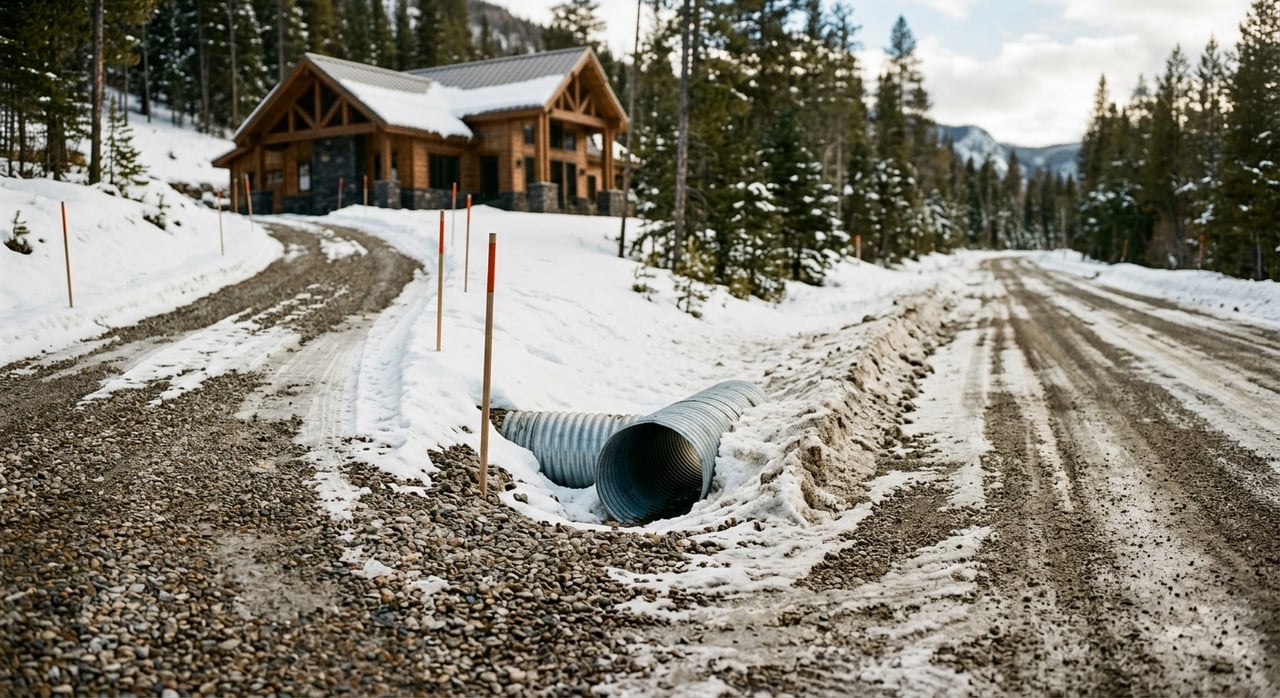
The county’s subdivision regulations can require a homeowners’ association to enforce covenants and provide road and ditch maintenance along with snow-removal services. If a property is on a private road, snow removal may be a private expense rather than a public service.
That is why it helps to ask practical questions early:
- Is the road county-maintained or private?
- Who pays for plowing?
- Is there an HOA or road-maintenance agreement?
- How is access handled after a major storm?
Those details can affect convenience, cost, and peace of mind just as much as the acreage itself.
Access permits are not automatic
Even when a parcel looks easy to reach on a map, legal and physical access still need to be confirmed. In Sublette County, a driveway connecting to a county road requires a separate access permit.
If access comes from a state highway, that goes through WYDOT. The county also states that easements for access and utilities are the owner’s responsibility.
That means access is not only about whether you can see a road. It is also about whether the driveway is properly permitted and whether the parcel has the easements needed for practical use.
Zoning, setbacks, and HOA rules shape flexibility
One of the big appeals of Boulder acreage is flexibility. Still, flexibility is not unlimited.
All private lands in Sublette County are assigned a zoning district, and setbacks vary by district. The county notes that front setbacks are measured from the easement line of a private or public roadway, which can affect how far back a home must sit from the road corridor.
If the property is in an HOA, written HOA approval is required before the county will issue a residential building permit. That makes it important to review covenants and HOA requirements early, especially if you are planning a shop, barn, fence, or other improvements.
Livestock may be allowed, with limits
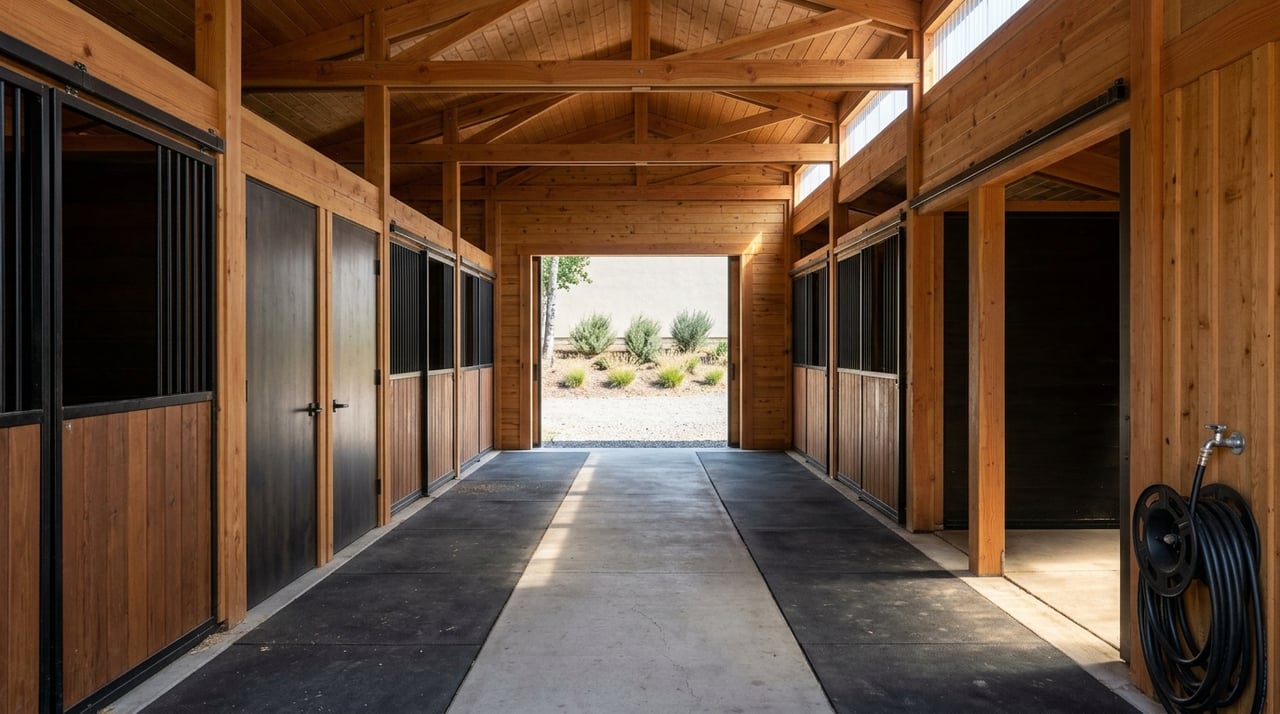
Many buyers are drawn to small acreage because they want room for animals. In Sublette County, livestock is allowed on sites of at least 1 acre, but it must be maintained so it does not create a nuisance.
The county standard allows 2 animal units on a 1-acre site and 1 animal unit per acre on sites that are 2 acres or larger. In practical terms, a 5-acre parcel may support some livestock use, but the exact fit depends on county standards, the zoning district, and any HOA covenants.
County policy also discourages residential development that disrupts livestock movement or grazing. The county comprehensive plan further states that landowners are responsible for fencing out livestock under state law.
Building in Boulder is its own process
Sublette County has not adopted a residential building code, but state electrical codes still apply. The county also strongly encourages building designs that account for local snow loads.
The county does not issue occupancy permits. For residential permits, a typical application package includes a site plan showing property boundaries, building location, well location, septic location, driveway access, and setbacks.
This process is another reason rural purchases benefit from careful upfront review. The more clearly you understand the site plan and improvement layout before closing, the fewer surprises you are likely to face later.
A few day-to-day details to remember
Some rural realities are easy to overlook when you are focused on views and acreage numbers. For example, the county can assign a property address on request, but USPS home delivery is not available for every parcel in the county.
That means some owners use a P.O. Box instead of standard home delivery. It is a small detail, but it is part of the broader picture: acreage living often asks you to think through systems that town buyers may take for granted.
Why local guidance matters
In Boulder, 5 to 20 acres can offer privacy, elbow room, and a strong connection to the land. The tradeoff is that water, wastewater, roads, permits, and covenants all play a bigger role in your decision than they might in a typical in-town purchase.
That is where a process-first approach really helps. When you understand how these systems work together, you can make a more confident choice about whether a property truly fits your goals, your budget, and your day-to-day lifestyle.
If you are weighing acreage in Boulder or anywhere in Sublette County, working with someone who understands rural property details can save you time and help you ask better questions from the start. When you are ready to explore your options, connect with Janelle Villalba for practical, local guidance tailored to Wyoming acreage living.
FAQs
What does small-acreage zoning mean in Boulder, Wyoming?
- In Sublette County, rural-residential districts such as R-R 5, R-R 10, and R-R 20 have minimum site-area standards of 5, 10, and 20 acres, and those standards affect how land can be used and improved.
What do Boulder, Wyoming acreage buyers need to know about wells?
- A groundwater well requires a permit from the Wyoming State Engineer before drilling, and the work must be completed by Wyoming licensed well and pump contractors.
What do Boulder, Wyoming acreage buyers need to know about septic systems?
- Sublette County requires a septic permit before construction, replacement, or modification, and septic layout must meet county standards for site size, soil and groundwater conditions, and separation distances from wells.
Who maintains roads for small-acreage properties in Boulder, Wyoming?
- County Road & Bridge maintains only county-maintained roads, while many subdivision roads are private and remain the responsibility of property owners or HOAs unless the county has formally accepted maintenance responsibility.
How does snow removal work for Boulder, Wyoming acreage properties?
- Snow removal may be a private responsibility, especially on subdivision roads, and some HOAs may be required to provide snow-removal services under county subdivision regulations.
Can you keep livestock on a small-acreage property in Boulder, Wyoming?
- Livestock is allowed on sites of at least 1 acre under county standards, but animal-unit limits, nuisance rules, zoning, and HOA covenants can all affect what is allowed on a specific parcel.
What should buyers verify about access for Boulder, Wyoming acreage land?
- Buyers should confirm whether the property has proper legal and physical access, whether a driveway permit is needed for a county road connection, and whether any access or utility easements are in place.
What should buyers know about mail delivery on Boulder, Wyoming acreage?
- Not every parcel has USPS home delivery, so some rural property owners use a P.O. Box instead.