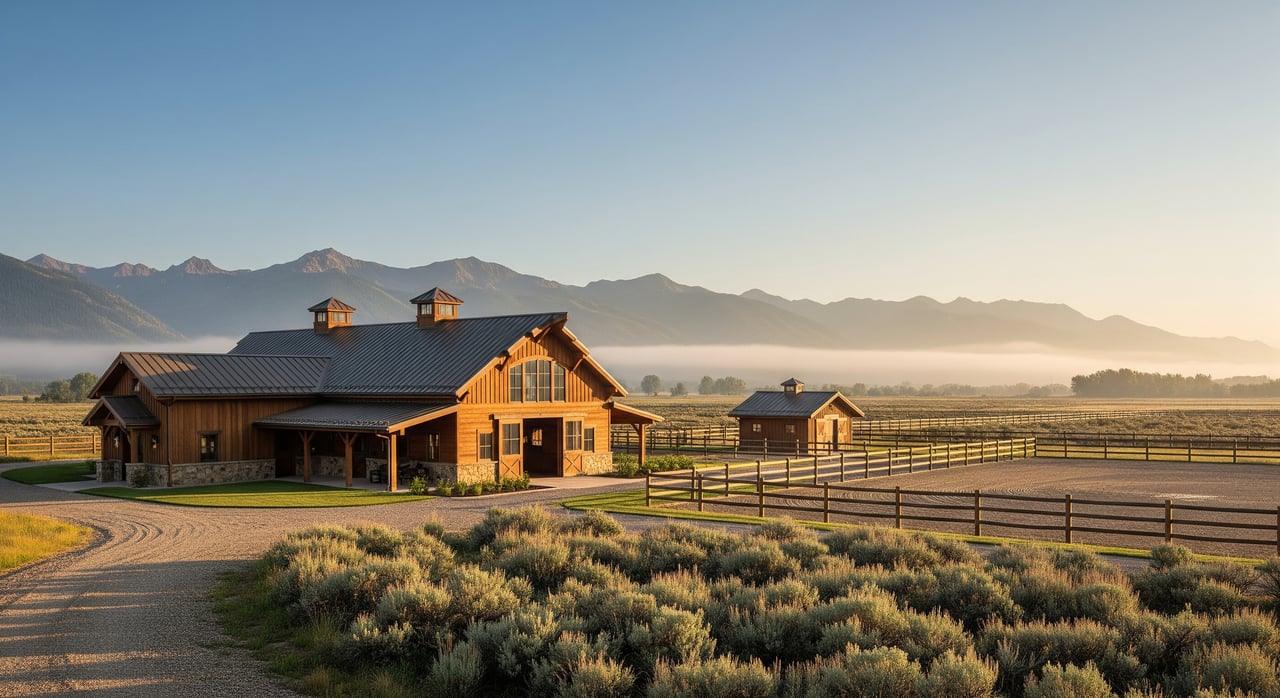
Dreaming of a place where your horses thrive and your lifestyle fits the Wyoming mountains? In Bondurant, the land and climate shape how a horse property works day to day. You want enough usable acreage, reliable water, safe fencing, and winter-ready systems that make care easier when the snow flies. This guide shows you exactly what to look for in Bondurant horse properties, what upgrades add value, and how to plan your due diligence so you can buy with confidence. Let’s dive in.
Why Bondurant is different
Bondurant sits at high elevation with a semi-arid climate, cold winters, and a short growing season. Those conditions influence forage productivity, water availability, and building design. You should plan for extended winter feeding and larger hay storage than in lower, wetter regions. Seasonal access also matters, since snow and mud can affect daily routines and pasture use.
Usable acreage and stocking rates
Usable acreage is more important than raw acreage. Steep slopes, heavy sagebrush, rock outcrops, wetlands, or dense forest reduce grazeable area. Ask for maps and walk the property to verify how much pasture your horses can actually use.
In productive lowland areas you might see 1–2 acres per horse. In Bondurant’s semi-arid, high-elevation setting, a practical range is often 2–5 acres per horse depending on irrigation, pasture condition, and how much you plan to supplement with hay. Use ranges, not absolutes, and consult local experts for site-specific guidance.
How to verify usable acres
- Identify fenced paddocks, irrigated meadows, and cross-fencing.
- Note slopes, brush and rock coverage, and any wetlands or drainages.
- Look for productivity clues like hay yield, forage species, weed pressure, and any signs of overgrazing.
Pasture setup and rotation
- Use cross-fencing to rotate grazing and reduce overuse. Three to four paddocks offer flexibility.
- Distribute water to each paddock to prevent trampling near a single water source and to support rotation.
- Plan for reseeding with cold-tolerant grasses and weed control as needed.
Hay and winter storage
Long, cold winters increase feed needs. You should size covered hay storage for extended feeding and keep it dry and well ventilated to prevent spoilage. Sellers can boost appeal by noting bale capacity and easy drive-up access for deliveries.
Barns, sheds, and arenas that work
A functional barn with safe stalls, a secure tack room, and dry, dedicated hay storage is a strong draw. Common stall sizes range from 10x10 to 12x12 feet, with good ventilation and safe flooring. Loafing sheds or run-in shelters in each pasture help protect horses during winter weather.
For training and daily exercise, an outdoor arena adds value. A 100x200-foot arena suits multi-use riding, while 60x120 feet can work for training or turnout. Orientation and drainage are critical in freeze–thaw cycles. A compacted base, appropriate sand or footing mix, and well-planned drainage improve year-round usability.
Fencing that attracts buyers
Buyers look for safe, visible, low-maintenance fencing. Documented fence type and condition helps you evaluate long-term costs and safety.
- 3- or 4-rail wood board: Highly visible and traditional, with low injury risk if maintained. Requires ongoing upkeep and can be affected by snow loads.
- Steel pipe or round-rail: Very durable and low maintenance with a clean, professional look; higher upfront cost.
- Horse-safe woven wire with a top rail: Cost-effective for mixed livestock; needs a visible top rail to protect horses.
- High-tensile electric: Economical and effective when installed with visibility in mind; requires reliable power and maintenance.
- Barbed wire: Generally not recommended for horses due to injury risk.
Minimum practical standards include visible fence lines, a typical perimeter height of 48–54 inches, and gates sized for modern trailers. Safe holding areas with smooth, solid surfaces and thoughtful gate placement make daily handling easier.
Water access and water rights
Water reliability is both a practical and legal priority in Wyoming. Most rural Bondurant parcels rely on wells, springs, and irrigation ditches rather than municipal service. Evaluate physical water reliability and legal clarity before you buy.
- Wells: Review flow rate, depth, static level, and water quality tests. Ask for pump age and service records.
- Springs and surface flows: These can be productive but may fluctuate seasonally. Confirm reliability.
- Irrigation ditches and rights: Irrigated meadows can dramatically increase forage productivity. Understand diversion schedules and legal rights.
Wyoming follows prior appropriation, and water rights are real property interests. As a buyer, obtain documentation on water rights, well permits, and any decrees. As a seller, disclose known rights, diversion structures, and permits. Clarity on rights and infrastructure strengthens value and reduces surprises in escrow.
Winter water systems
Heated or insulated troughs and automatic heated waterers are common expectations in Bondurant’s winters. Insulate or bury lines where practical, and consider a backup power solution to keep water flowing during outages.
Trailer access, roads, and circulation
Make sure you can move horses and hay safely in all seasons. Gate openings should be at least 12–14 feet wide, with 14–16 feet preferred for larger rigs. A pull-through drive or generous turnaround reduces the need to back long trailers. Well-graded gravel surfaces with a solid base hold up better to freeze–thaw cycles. Confirm overhead clearance and prune trees along drive approaches.
Ask about road access and maintenance responsibilities. Private road agreements, county plowing, and seasonal closures affect daily use and winter access for feed, vets, and farriers.
Upgrades Bondurant buyers pay for
High-value improvements include:
- Quality perimeter fencing and well-maintained cross-fencing.
- A functional barn with stalls, tack room, and dry hay storage sized for winter.
- Reliable water infrastructure, including documented water rights and winterized waterers.
- Multiple paddocks with loafing sheds and good access routes.
- A properly built outdoor arena with solid base and drainage.
- Trailer-friendly circulation with widened gates and designated parking.
- Manure management facilities that are easy to access with equipment.
Low-cost, high-impact touches:
- Repair and freshen fences, gates, and latches.
- Add or repair paddock water delivery and winterize troughs.
- Clean and secure tack and feed rooms.
- Prepare simple documentation such as hay records, well test results, fence maintenance logs, and maps of usable acres.
Seller checklist for stronger listings
- Inventory and document improvements, including barns, fencing, arenas, and water systems.
- Assemble water rights information, well permits, and recent water tests.
- Address safety issues like broken rails, protruding nails, or uneven floors.
- Provide realistic maps of usable pasture acres and outline winter care logistics.
- Encourage inspections: wells, septic, barn structure, fence condition, and any easements or access agreements.
Buyer due diligence checklist
- Verify usable acres, stocking assumptions, and forage productivity.
- Review well depth, flow rate, and water quality; confirm water rights.
- Inspect fence types, age, and condition; note linear footage by type.
- Confirm hay storage capacity and winter water systems.
- Review road access, seasonal maintenance, and trailer circulation.
- Order a title search to check easements, covenants, and any grazing leases.
Local resources to contact
- University of Wyoming Extension for grazing, forage species, and pasture planning.
- Wyoming State Engineer’s Office for water rights, well permits, and adjudication records.
- Sublette County Planning and Zoning for permitting, setbacks, and road policies.
- USDA NRCS (Sublette County) for conservation practices and technical assistance on fencing, watering systems, and pasture management.
When you gather written guidance from these offices and include it in your listing or offer, you build credibility and reduce risk for both sides.
Ready to evaluate a specific property or prep yours for market? Get personalized, local guidance from Janelle Villalba. You’ll get clear next steps, trusted vendor connections, and a process that keeps you confident from first showing to closing.
FAQs
How many acres per horse make sense in Bondurant?
- Plan on a range of about 2–5 acres per horse, depending on irrigation, pasture condition, and your hay program; verify site specifics before setting a final stocking rate.
What should I know about Wyoming water rights when buying in Bondurant?
- Water rights are separate property interests under prior appropriation; confirm rights, well permits, and any decrees in writing and ensure they transfer properly with the sale.
What barn and shelter features help with winter care in Sublette County?
- Safe stalls, secure tack/feed rooms, loafing sheds in each paddock, dry hay storage, and heated or insulated water systems reduce winter labor and stress.
How do I evaluate fencing on a Bondurant horse property?
- Check type, visibility, height (typically 48–54 inches), condition, and gate width for trailers; avoid barbed wire for horses and verify maintenance history.
What should sellers prepare before listing a Bondurant equine property?
- Provide maps of usable acres, fence and barn documentation, water rights and well records, hay storage capacity, and notes on winter logistics and road maintenance.
Can outdoor arenas be used year-round in Bondurant?
- With proper base, footing, and drainage, you can extend the season, but freeze–thaw cycles mean design and orientation are key to usability.